
Developers
API across multi-channel collection, settlement, and invoice payment
Payment API handles multi-channel collection; Settlement and Invoice Payment APIs map to large-scale conversion and mid-size disbursements. Webhook and reporting keep all three flows traceable and reconcilable within merchant systems.
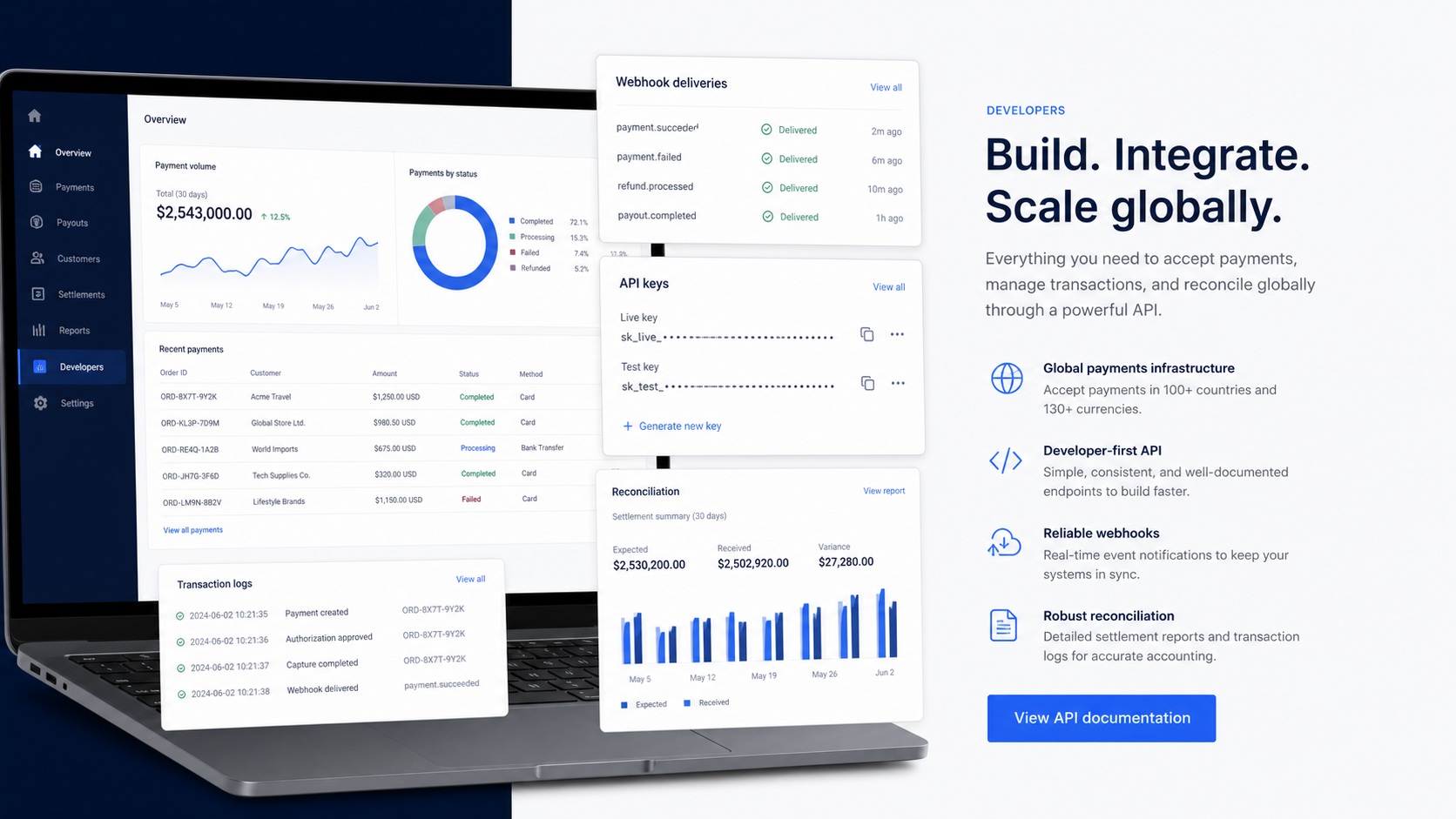
API Coverage
API corresponding to the three core services
Payment API (Cryptocurrency Payments)
Create payment orders, obtain payment addresses, query transaction status, and process payment confirmation events.
Settlement API (settlement)
Request large-scale settlement quotes; query settlement status and fee details for cryptocurrency-to-fiat conversion or crypto retention.
Invoice Payment API (payout)
Initiate mid-size crypto wallet, multi-currency fiat, and local-channel payouts; query status and failure reasons.
Webhook & Dashboard
Receive collection, settlement, and invoice payment events for unified operations and finance team visibility.
POST /v1/payment-intents
{
  "merchant_order_id": "INV-2026-0618",
  "amount": "2480.00",
  "currency": "BTC",
  "network": "BTC",
  "settlement_preference": ["HKD", "USD"],
  "webhook_url": "https://merchant.example/webhook"
}

Webhook event:
payment.confirmed
settlement.review_required
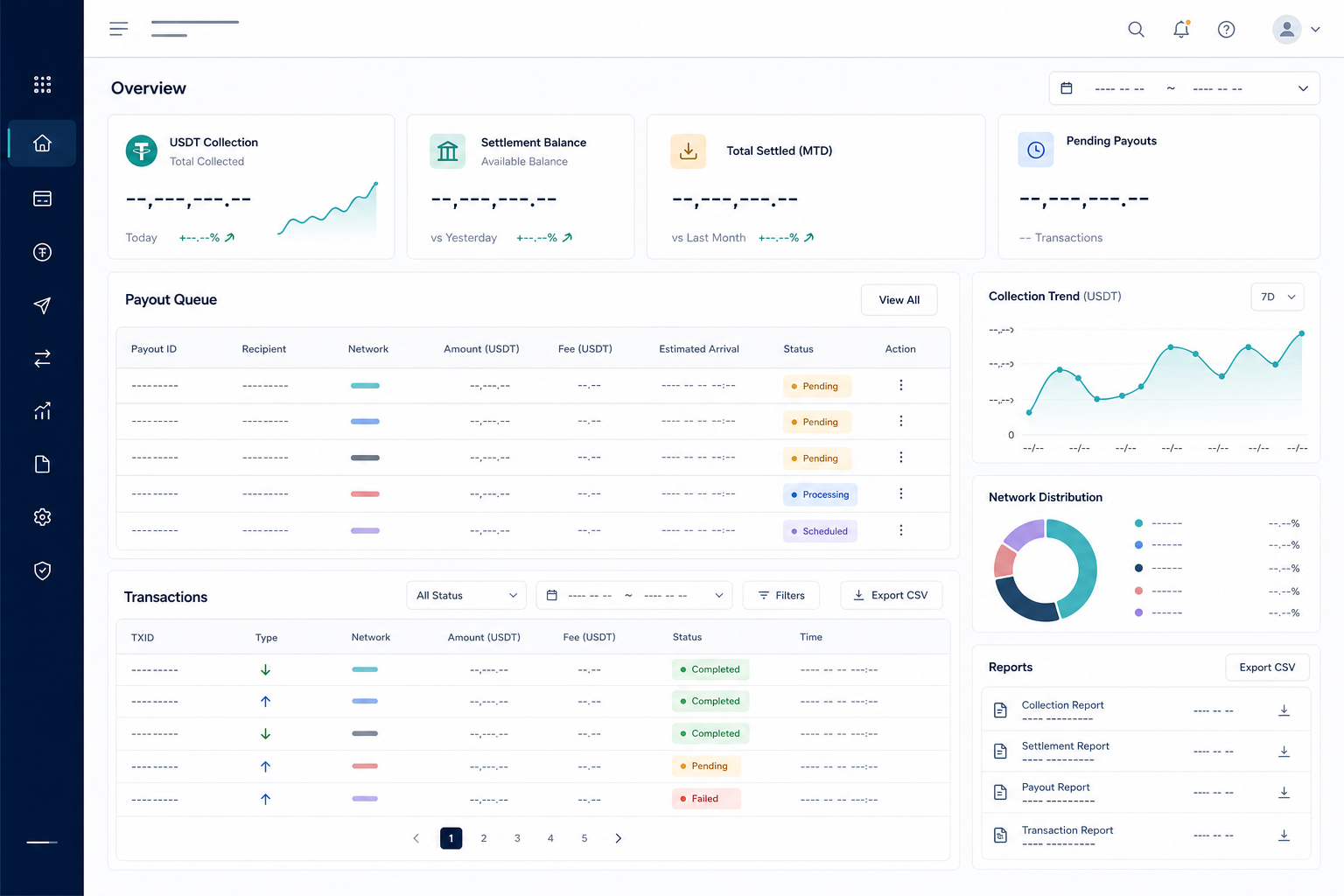
Operational Design
Designed for real operations, not just payment buttons
Common problems in the payment process are not only "receipts", but also include reconciliation, status synchronization, error link processing, payment failure, expense accounting and financial reports. APIs need to be designed with dashboards, webhooks, and manual review processes.
- Supports idempotency key to avoid repeated creation of orders or withdrawals
- Webhook should use signature verification and retry handling
- High-risk or large-ticket transactions may return review_required status
- CSV reporting supports financial reconciliation and expense details
Secure Integration
Confirm permissions, signatures, and reconciliation rules before integration
The public website only displays core capabilities; the actual API fields, event naming, test environment and status transfer will be provided according to the service scope after review by the merchant.
- API key permissions need to be differentiated by purpose to avoid mixing collection and withdrawal permissions.
- Webhook should use signature verification, retries, and idempotent design
- Finance systems must reconcile four data types: transactions, fees, settlement, and payout
- High-risk transactions or large withdrawals can enter the manual review process

FAQ
FAQ
Which merchants is the API suitable for?
API is suitable for platform-based merchants, high-frequency transactions, merchants who need to automatically create orders, synchronize payment status, batch withdrawals or access internal financial systems.
Do I have to complete a review before providing API documentation?
The public page only displays core capabilities; specific fields, test environments, event naming and permission configurations will be provided based on service scope after merchant review.
Does webhook require signature verification?
It is recommended that merchant systems use signature verification, retry processing and idempotent design to avoid repeated entries or incorrect status synchronization.
Can I use Dashboard only without API?
Can. Low-frequency merchants can use Dashboard, Payment Link or Invoice first, and high-frequency or platform merchants can then access the API.
Does the API support withdrawals?
It can support cryptocurrency or designated channel withdrawal applications, status inquiries, failure reason feedback and report reconciliation based on merchant review results.
What preparations are usually required for test access?
Typically requires merchant callback URL, technical contact, expected scenarios, test order flow, and webhook handling.
Need API integration documentation?
After completing the merchant review, we can provide access methods, test procedures and webhook configuration suggestions based on your system architecture.